



Renal Stone
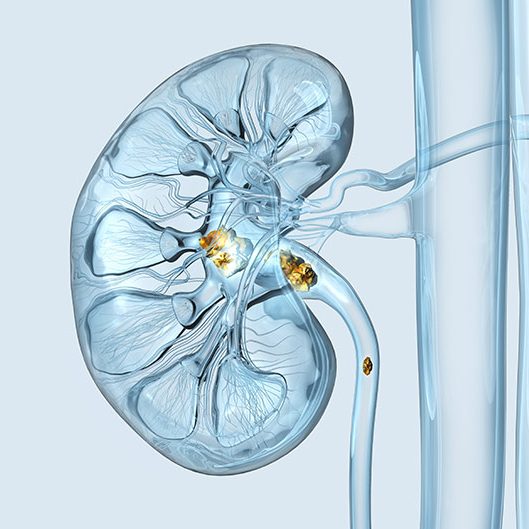
Renal stone is the pathology that encompasses all of the types of kidney stones and calculi formed from the chemical substances and mineral salts present in urine. These stones usually form in the renal cavities, but they can also form in the other urinary tracts (ureter and bladder) through which the urine flows until it is passed.
When the size of the kidney stones is bigger than the urinary tracts through which they travel, they are held back and obstruct the passage of the urine. Consequently, a very intense pain is generated in the affected area, called renal colic.
Relationship With Urinary Ph
The list of the main types of kidney stones, according to their composition and urine pH, is as follows:
A urine pH below 5.5 favours the formation of kidney stones of uric acid, cystine* and calcium oxalate.
A urine pH above 6.2 favours the formation of calcium phosphate, struvite (or infection-induced) and calcium oxalate stones.
Benefits
The control and monitoring of urine pH can prevent the formation of kidney stones and allows them to be discharged with greater agility.
It is recommended to maintain the pH within a preventive range of 5.5 – 6.2, situating the urine’s acidity level within a range in which kidney stones cannot form.
The monitoring of urine pH provides the security and peace of mind necessary in order to determine the urine’s acidity levels at all times and, consequently, know whether there is a risk of kidney stones forming or not.
*To treat and prevent cystine stones, it is recommended to keep the urine pH between 7.5 and 8.